
Inspiring the Next Generation of Scientists: Students Gain Hands-On Laboratory Experience
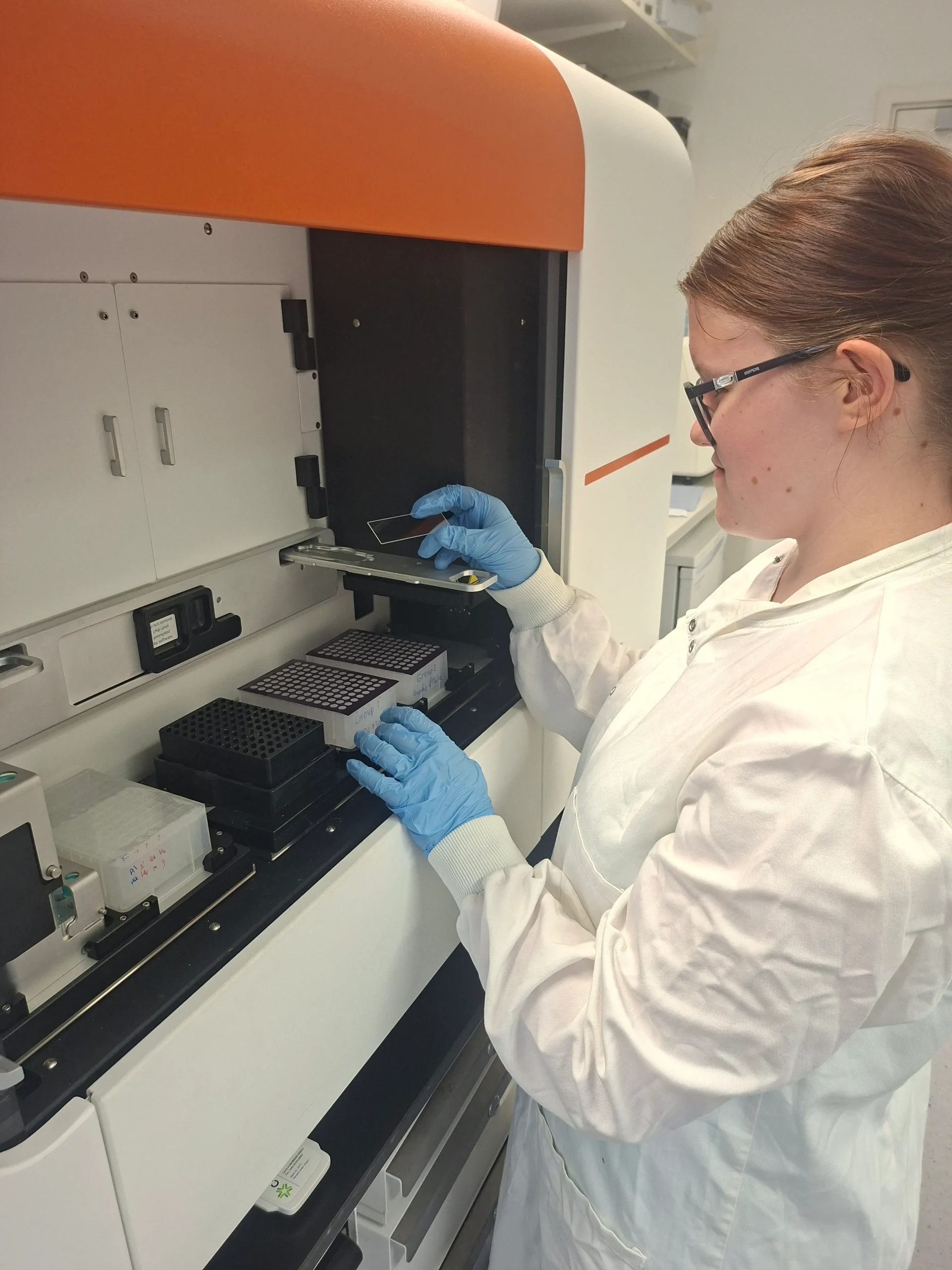 The Manchester Customer Experience Center (CEC) recently welcomed three Year 12 students for a hands-on laboratory experience designed to introduce them to advanced scientific techniques and equipment beyond what is typically available in schools.
As part of their school curriculum, all Year 12 students are required to complete work experience. With a strong interest in science and aspirations to pursue biomedicine or medical school at university, the three students were given the opportunity to explore practical laboratory work in a professional scientific environment.
During their visit, the students gained experience with several key laboratory techniques. They learned how to separate a mixture of proteins using a size-exclusion column, perform serial dilutions of an antibody solution with multichannel pipettes, and measure antibody concentrations by analyzing binding on a Carterra Protein A/G chip using the Carterra LSA-XT system.
Importantly, the students were actively involved throughout the experimental process. They took responsibility for writing the experimental protocol, loading the chip, preparing and loading the plates, and conducting post-experiment analysis using Carterra Kinetics software. This hands-on approach allowed them to experience multiple stages of a scientific workflow, from experimental preparation through data analysis.
The students particularly enjoyed working with the Carterra LSA-XT and highlighted the value of accessing advanced instrumentation that they would not ordinarily encounter in their school laboratories.
Experiences like this provide an important opportunity for students to connect classroom learning with practical scientific applications. By engaging directly with laboratory equipment, experimental methods, and data analysis, students can develop a deeper understanding of the skills and processes involved in scientific research.
The Carterra Manchester CEC’s initiative demonstrates the value of introducing young people to real-world laboratory environments as they consider their future academic and professional paths. Providing early exposure to advanced technologies can help build confidence, strengthen scientific curiosity, and inspire the next generation of scientists and healthcare professionals.